
Choosing to work with a smaller consultancy firm doesn't mean you're taking on greater risk. Nor does it mean that the consultancy is less capable. That historic perception simply isn't true anymore.
Of course, hiring a bigger firm has its benefits. The traditional Big Four have scale, breadth, and the ability to offer complex global programs. We can't offer those things at Trend-Setters Consulting, and neither can other smaller firms, so businesses that want them have good reason to choose a bigger consulting firm.
But size isn't everything.
You can't determine a firm's capability by the number of staff it has, judge the quality of delivery on its profits or assess the risks involved by looking at its market share.
How layers slow decisions and dilute ownership
Often, the larger a firm, the more layers involved in its processes. That creates distance between senior leadership and those delivering the service, which can mean a client has to go through many doors before reaching someone with the authority to make a decision.
If every decision has to go through multiple layers of approval, it's not hard to see how ownership of each choice gets diluted and execution slows down. In a smaller firm, there are fewer doors to knock on and fewer places for accountability to get lost. The senior figures are simply closer to the client.
When I inherited Trend-Setters from my father, I knew I wanted that proximity to be core to my approach. My son was only a few months old when I had to go on my first business trip to meet a client, so it was difficult to leave my family behind. But I knew that going on that trip would prove my commitment to the company and the clients, and show they could reach me without having to go through any doors.
Keeping the decision-making process compact is a central focus for me, and a key benefit of smaller specialized firms.
In a smaller firm, there are fewer doors to knock on and fewer places for accountability to get lost.
Fewer steps mean decisions are made faster, and by keeping senior members closer to the deliverable work, there is a clear, direct path to accountability when things don't go as planned.

The consulting market is shifting
This isn't just something I'm seeing from my side of the table. The entire consulting market is seeing this shift happen.
Smaller firms are beginning to pose a greater challenge to traditional giants, with the Observer reporting that consultancy SMEs grew revenues by 8% last year, compared with 3% for the sector as a whole. It forecasts that the gap will widen further this year, with SMEs set to grow by 12%, and the wider sector by only 6%.
These firms are attracting more than just clients. They're bringing in experienced people from the firms they're competing with.
Unity Advisory proves that. Founded by former PwC and EY senior leaders, it was specifically designed to challenge the traditional model and has attracted significant backing. The emergence of firms like Unity, built by former Big Four consultants, shows that size no longer determines access to expertise.
Buyers don't have to pick a side
Businesses now have more choice than ever, and actually, they don't need to choose between bigger and smaller firms.
Specialist firms can work directly with a business, or they can fit alongside a larger consulting partner, bringing focused expertise and speed to the parts of a program where they add the most value. That's the model we've built at Trend-Setters, embedding our people within Fortune 500 environments to get close to the problem and focus on execution, without adding another layer of management.
For buyers choosing a consultancy firm, look beyond the brand. Base your decision on who is doing the work and how many doors stand between you and the decision-makers.
On Camera
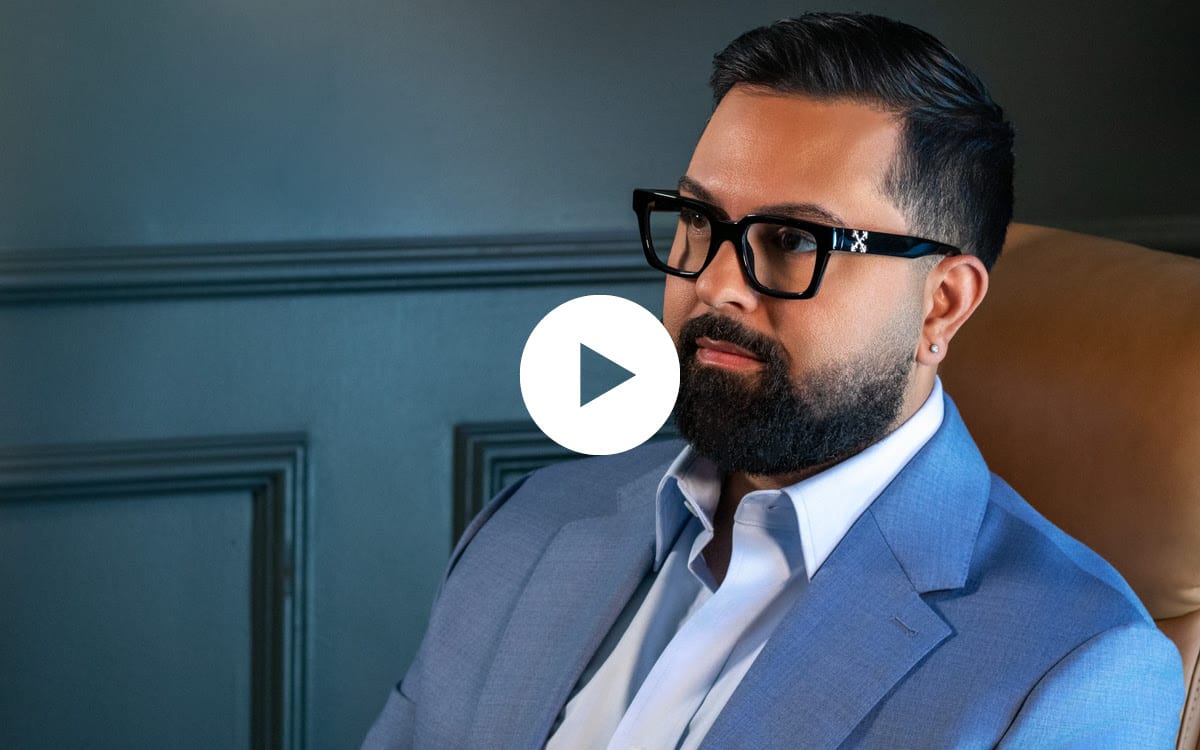
Bigger consultancy firms can't always give straight answers. They have a longer chain of command that communications have to go through before they come back to the client. At Trend-Setters, we can dedicate more time to each client, offer quicker answers, and provide a more personal service.
Keep reading. It's free
- How layers slow decisions and dilute ownership
- The consulting market is shifting
- Buyers don't have to pick a side
- and 1 more section
3 more minutes to read.
Free. No spam, ever. One click to unsubscribe.